Column Wine Rack Design: Maximizing Vertical Cellar Space
Understanding Vertical Architecture in Wine Storage
When discerning collectors confront the perennial challenge of finite cellar real estate, vertical expansion emerges as the most judicious solution. Column wine rack design ideas pivot on leveraging ceiling height rather than surrendering precious floor space—a philosophy particularly resonant within metropolitan residences and commercial hospitality venues where square footage commands premium valuation. These elegant vertical repositories transform underutilized altitude into functional art, creating dramatic visual anchors whilst accommodating substantial bottle inventories.
The architectural merit of columnar configurations extends beyond mere capacity. They establish rhythmic verticality that guides the eye upward, amplifying perceived spatial volume. For luxury wine storage installations, this dimensional manipulation proves invaluable. Contemporary column designs now incorporate modular frameworks that accommodate various bottle formats, from standard Bordeaux to magnum presentations, ensuring adaptability as collections evolve.
Foundational Principles for Column Rack Integration
Successful column wine rack implementation demands meticulous attention to structural integrity and environmental harmonization. Load-bearing calculations must account for the substantial weight of fully-stocked vertical assemblies—a consideration that separates amateur installations from professionally-engineered systems. Premium materials such as mahogany, walnut, or powder-coated steel not only withstand gravitational stress but contribute aesthetic gravitas befitting distinguished collections.
Proximity to cooling infrastructure warrants careful deliberation. Columns positioned near ductwork or refrigeration units benefit from optimal thermal regulation, while those situated against exterior walls may require supplementary insulation. The interplay between vertical storage and climate control systems fundamentally influences preservation outcomes, making consultation with specialized designers essential for high-end cellar projects.
Modular Solutions for Bespoke Environments
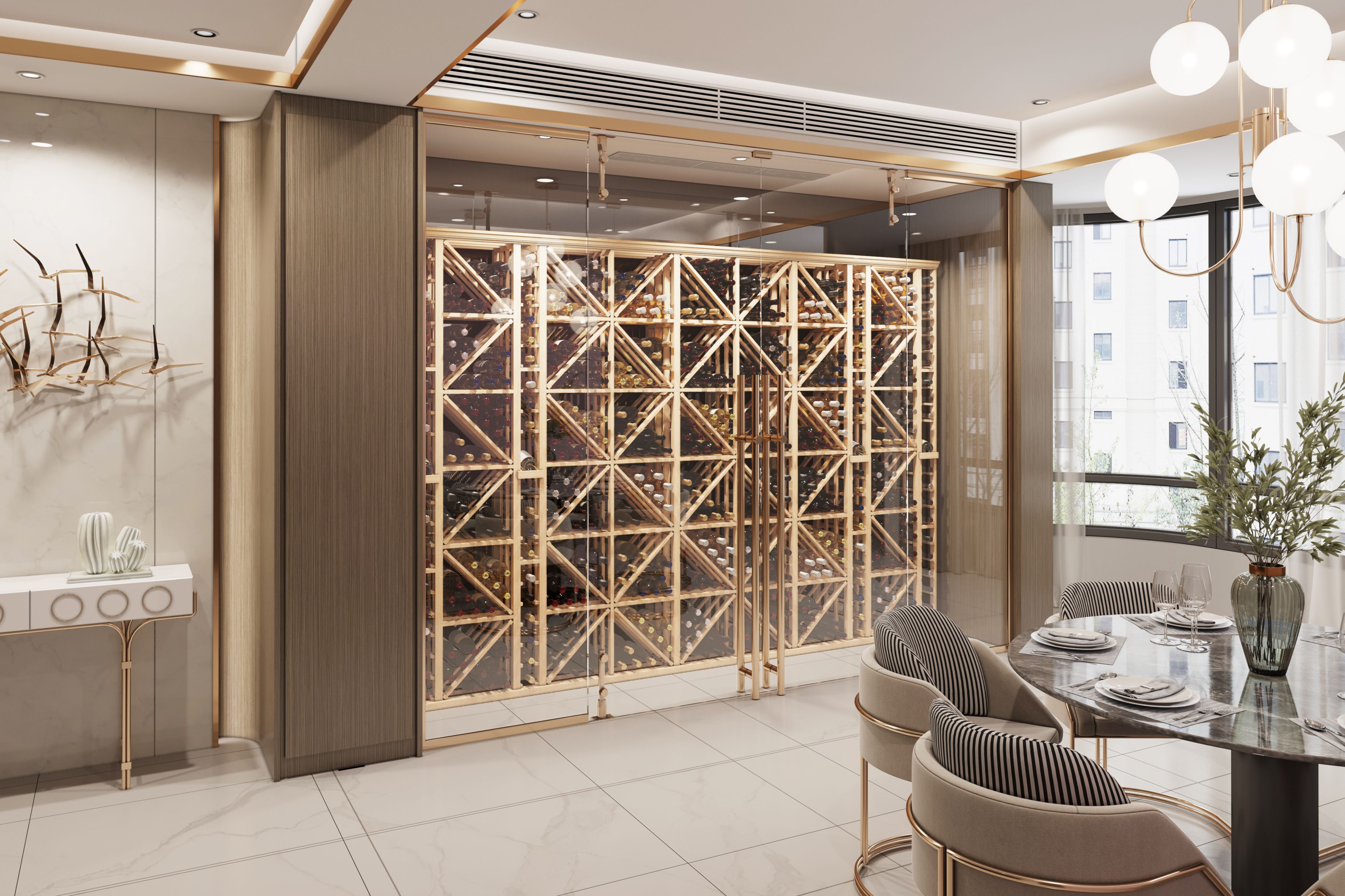
For those seeking turnkey sophistication, purpose-engineered modular systems offer exceptional versatility without compromising on refinement. The Elite Kit Rack Mahogany Column represents a synthesis of traditional craftsmanship and contemporary modularity, featuring rich mahogany construction that matures beautifully within climate-controlled environments. This stackable architecture permits customization to ceiling heights while maintaining structural continuity—an invaluable attribute when addressing non-standard architectural dimensions.
Such modular frameworks eliminate the protracted timelines associated with fully custom millwork whilst delivering comparable aesthetic impact. Installation procedures remain straightforward, yet the finished presentation conveys bespoke elegance. For residential developers managing multiple high-end properties or restaurateurs curating impressive wine programs, this approach balances exclusivity with operational efficiency.
Strategic Placement and Traffic Flow Considerations
The positioning of columnar elements within the broader cellar topology significantly influences both functionality and experiential quality. Corner placements maximize peripheral zones often relegated to secondary storage, whilst central columns can serve as dramatic focal points when flanked by complementary racking systems. The spatial choreography should facilitate effortless bottle retrieval without congestion—particularly vital in commercial settings where sommelier access must remain unimpeded during service hours.
Illumination Integration Techniques
Vertical structures present unique opportunities for integrated lighting schemes. LED strip installations recessed within column frameworks create ambient luminescence that highlights label artistry whilst maintaining UV-protective specifications. This synergy between illumination and architecture transforms functional storage into gallery-worthy installations, elevating the sensory experience for collectors and guests alike.
Material Selection and Longevity
Investment-grade column systems demand materials engineered for endurance within humidity-controlled environments. Consider these performance characteristics:
- Hardwoods with tight grain structures resist warping under fluctuating moisture conditions
- Marine-grade finishes provide moisture barriers without off-gassing volatile compounds
- Metal components require corrosion-resistant treatments to maintain structural integrity
- Modular joints should permit thermal expansion without compromising stability
Addressing Common Design Challenges
How do you prevent columns from visually overwhelming compact cellars? Strategic proportioning remains paramount. Slender profiles with open-cell configurations maintain bottle capacity whilst preserving sightlines. Alternatively, positioning columns against perimeter walls rather than within central circulation zones prevents spatial fragmentation.
What bottle capacity should serious collectors anticipate per vertical foot? Industry standards suggest eighteen to twenty-four bottles per linear foot of column height, contingent upon racking configuration and bottle diameter. Magnum storage naturally reduces density, while standard formats permit denser arrangements.
The most successful cellar designs honor both the collection's current dimensions and its anticipated growth trajectory, building flexibility into the architectural framework from inception.
Harmonizing Columns with Broader Design Narratives
Column installations should dialogue cohesively with complementary cellar elements—cable wine systems, climate chambers, and tasting enclaves. This holistic approach ensures stylistic continuity rather than disjointed assemblages. For those pursuing comprehensive luxury wine storage ecosystems, coordinating finishes, materials, and proportional relationships across all components creates refined environments worthy of distinguished vintages.
Vertical storage architecture represents more than utilitarian accommodation. It embodies the collector's commitment to preservation, presentation, and spatial intelligence—qualities that resonate deeply with connoisseurs who view their cellars as curated repositories of vinous heritage.