Contemporary Floating Wine Display Ideas for Modern Homes
The Evolution of Suspended Wine Storage Systems
Contemporary floating wine displays have revolutionized the aesthetics of luxury home interiors, transcending traditional storage paradigms through innovative suspension mechanisms and minimalist design philosophies. These sophisticated installations eliminate the visual weight of conventional cabinetry while creating dramatic focal points that celebrate vinous collections as sculptural elements within residential spaces.
The architectural integration of floating systems demands precise engineering calculations to ensure optimal weight distribution across mounting surfaces. Modern installations utilize aircraft-grade aluminum brackets and tensioned cable systems that can support substantial loads while maintaining the illusion of weightlessness. This engineering prowess enables homeowners to showcase their most prized vintages in gravity-defying arrangements that command attention and conversation.
Professional sommeliers increasingly advocate for suspended storage solutions due to their superior accessibility and climate optimization benefits. The elevated positioning facilitates natural air circulation around bottles, preventing temperature stagnation that can compromise wine integrity over extended storage periods.
Contemporary Material Innovation in Wine Display Architecture
Advanced Metallurgy Applications
Contemporary floating wine displays leverage cutting-edge metallurgical advances to achieve unprecedented strength-to-weight ratios. Aerospace-derived titanium alloys and powder-coated steel compositions provide corrosion resistance while maintaining structural integrity under dynamic loading conditions. These materials undergo specialized anodization processes that create lustrous finishes ranging from brushed platinum to deep charcoal patinas.
The incorporation of carbon fiber reinforcement elements allows for ultra-slim profile designs that virtually disappear against wall surfaces. These composite materials exhibit exceptional dimensional stability across temperature fluctuations, ensuring consistent bottle positioning regardless of seasonal climate variations within the home environment.
Glass and Acrylic Integration
Tempered glass shelving systems introduce transparency elements that enhance the floating aesthetic while providing robust support platforms for wine bottles. Low-iron glass formulations eliminate the characteristic green tint associated with standard glazing, creating crystal-clear surfaces that showcase label artwork without chromatic distortion.
Optical-grade acrylic alternatives offer impact resistance superior to traditional glass while enabling complex curved geometries impossible with conventional materials. These polymer systems can be thermoformed into flowing, organic shapes that complement contemporary architectural elements throughout modern homes.
Architectural Integration Strategies for Modern Residences
The seamless incorporation of floating wine displays requires careful consideration of existing spatial relationships and traffic flow patterns within residential environments. Strategic placement adjacent to entertainment areas maximizes the visual impact while ensuring convenient access during social gatherings. These installations function as transitional elements between formal dining spaces and casual living areas, creating sophisticated boundary definitions without physical barriers.
Professional designers recommend installing floating displays at eye level to optimize both aesthetic appreciation and ergonomic accessibility. The typical mounting height ranges between 48 and 60 inches from finished floor elevation, accommodating standard adult sight lines while preventing excessive reaching or bending during bottle selection processes.
Illumination Design Considerations
Integrated lighting systems transform floating wine displays into luminous art installations that evolve throughout daily lighting cycles. LED strip applications concealed within mounting brackets create dramatic uplighting effects that accentuate bottle silhouettes against surrounding wall surfaces. Color temperature selection becomes critical, with warm 2700K illumination enhancing the amber tones of aged vintages while cooler 3000K options complement contemporary label designs.
Programmable lighting controllers enable dynamic scenarios that adapt to different entertainment modes and time-of-day preferences. Gentle fade transitions and intensity modulation prevent harsh lighting changes that might disturb the wine storage environment while maintaining optimal visibility for label reading and selection activities.
Premium Floating Wine Display Solutions
For discerning homeowners seeking the pinnacle of contemporary wine display innovation, specialized floating wine rack collections offer meticulously engineered solutions that combine aesthetic excellence with functional superiority. These premium systems feature precision-machined components and proprietary mounting mechanisms designed specifically for luxury residential applications.
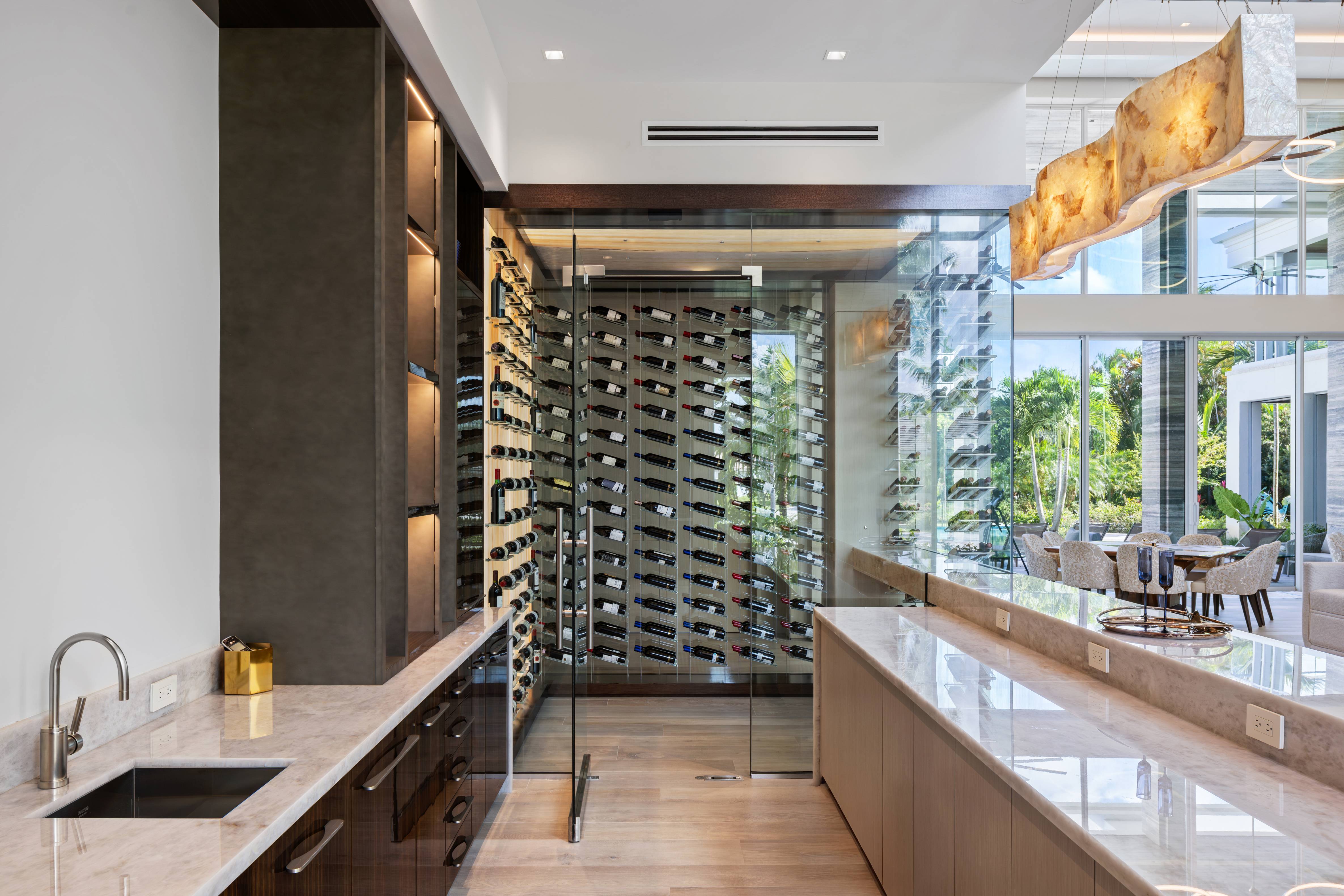
Professional-grade floating wine racks eliminate the visual clutter associated with traditional storage furniture while providing secure mounting solutions capable of supporting extensive collections. The innovative cable suspension systems create stunning visual effects that make wine bottles appear to float effortlessly against wall surfaces, transforming functional storage into captivating sculptural installations.
The Genuwine Cellars Reserve cable wine racks collection — the Ring, Label Line and Lumina systems — is the suspended-cable version of this approach, built on airplane-grade tension cable.
Customization and Scalability Options
Modular floating display systems accommodate evolving collection requirements through expandable configurations that maintain design coherence across installation phases. Initial installations can begin with compact arrangements that establish the aesthetic foundation, with subsequent additions seamlessly integrating into the existing framework without requiring complete system reconstruction.
Bespoke fabrication capabilities enable unique geometries tailored to specific architectural conditions and personal preferences. Custom powder coating applications provide unlimited color matching opportunities to coordinate with existing interior design palettes and hardware finishes throughout the residence.
Spatial Optimization Techniques
Contemporary floating wine displays maximize storage density within constrained spatial envelopes through innovative three-dimensional arrangements that utilize vertical and horizontal real estate efficiently. Staggered mounting patterns create visual rhythm while accommodating varying bottle dimensions from standard Bordeaux formats to oversized Champagne presentations.
"The most sophisticated wine displays achieve perfect balance between functional accessibility and artistic expression, creating installations that serve as both storage solutions and conversation centerpieces."
Corner applications present unique opportunities for dramatic installations that capitalize on underutilized spatial zones. Curved mounting systems follow wall geometries while maintaining consistent bottle angles for optimal label presentation and storage stability.
Multi-Level Configuration Strategies
Tiered floating arrangements create impressive visual impact through carefully orchestrated elevation changes that guide the eye through the wine collection in curated sequences. These installations can incorporate varying bottle orientations, from traditional horizontal storage to angled presentations that showcase vintage labels and capsule details.
Professional cellar designers utilize mathematical proportioning systems based on golden ratio principles to establish harmonious spacing relationships between display levels. These classical design foundations ensure timeless aesthetic appeal that transcends temporary style trends.
Climate Considerations and Environmental Integration
Floating wine display installations must account for microclimatic conditions that affect wine preservation quality over extended storage periods. Wall-mounted systems benefit from thermal isolation provided by air gaps between bottles and mounting surfaces, reducing heat transfer from structural elements that might experience temperature fluctuations.
Humidity management becomes particularly critical in open display environments where wines lack the protective enclosure of traditional cellaring systems. Strategic positioning away from direct sunlight and heating sources prevents premature aging while maintaining optimal storage conditions for both daily consumption wines and long-term collection pieces.
Ventilation and Air Circulation
The suspended nature of floating displays naturally promotes air circulation around individual bottles, preventing stagnant conditions that can contribute to cork deterioration and label damage. This passive ventilation system works in conjunction with whole-house climate control systems to maintain consistent environmental parameters.
Professional installations often incorporate discrete air movement devices that enhance natural circulation patterns without creating vibration disturbances that might affect wine sediment or aging processes.
Installation Best Practices and Technical Requirements
Successful floating wine display installations demand precise structural analysis to ensure adequate load-bearing capacity within existing wall systems. Professional assessment identifies appropriate mounting locations that align with framing members or require supplemental reinforcement to support dynamic loading conditions.
| Wall Type | Maximum Load Capacity | Recommended Mounting Method |
|---|---|---|
| Drywall with Wood Studs | 50-75 lbs per linear foot | Lag bolts into studs |
| Masonry/Brick | 100+ lbs per linear foot | Anchor bolts with expansion sleeves |
| Concrete | 150+ lbs per linear foot | Chemical anchors or wedge bolts |
Electrical coordination becomes essential when incorporating integrated lighting systems that require concealed wiring pathways and switching controls. Professional installations utilize low-voltage systems that minimize electrical hazards while providing reliable illumination performance.
Maintenance and Accessibility
Long-term maintenance requirements influence design decisions regarding accessibility and component serviceability. Floating systems should accommodate periodic cleaning and lighting component replacement without requiring complete disassembly of the wine collection.
Removable bottle retention mechanisms enable thorough cleaning of display surfaces while preventing accidental displacement during routine maintenance activities. These systems utilize magnetic catches or spring-loaded clips that provide secure retention without permanent installation.
Investment Considerations and Long-Term Value
Premium floating wine display systems represent significant investments in both functional storage capacity and residential property enhancement. These installations often increase home valuations through their contribution to luxury amenity packages that appeal to affluent buyers and wine enthusiasts.
The modular nature of quality floating systems provides flexibility for relocation during home renovations or residential moves, protecting the initial investment while enabling adaptation to new spatial configurations. This portability advantage distinguishes floating systems from built-in cellaring solutions that become permanent fixtures within specific properties.
- Reduced installation complexity compared to traditional wine cellars
- Minimal spatial requirements enable integration into existing rooms
- Superior accessibility for daily wine selection and collection management
- Enhanced visual impact creates impressive entertainment focal points
- Expandable configurations accommodate growing collections
Professional design consultation services ensure optimal system configuration that maximizes both functional performance and aesthetic impact within specific residential environments. These expert services provide invaluable guidance for navigating the complex array of available options while avoiding costly installation mistakes or suboptimal design choices.