Cable Wine Rack Spacing, Ceiling Height & Capacity Guide
Cable wine display systems represent the convergence of structural elegance and oenophile necessity, transforming ordinary cellars into architectural marvels. These tension-based configurations suspend precious bottles between ceiling and floor using precision-engineered stainless steel cables, creating an ethereal showcase that defies conventional racking paradigms.
As we advance into 2026, discerning collectors and hospitality visionaries increasingly gravitate toward these minimalist installations that prioritize visual permeability while maintaining impeccable bottle orientation. The engineering sophistication beneath their apparent simplicity demands careful consideration of spatial dynamics, load distribution, and aesthetic integration.
Understanding Cable-Supported Bottle Architecture
The foundational principle involves vertical cables threaded through precision-machined mounting hardware at strategic ceiling and floor junctures. Each cable supports individual bottle pins or horizontal rods that cradle wine at the optimal fifteen-degree angle, preventing cork desiccation while showcasing labels. This configuration eliminates visual obstruction inherent in traditional wooden or metal frameworks.
The tensile strength of marine-grade stainless steel cables—typically 316 or 304 grade—ensures load capacities exceeding conventional requirements. A properly engineered system distributes weight across multiple anchor points, creating structural redundancy that accommodates collections ranging from intimate reserves to commercial repositories holding thousands of bottles.
Signature Configurations for Contemporary Spaces
The Label Line Advantage
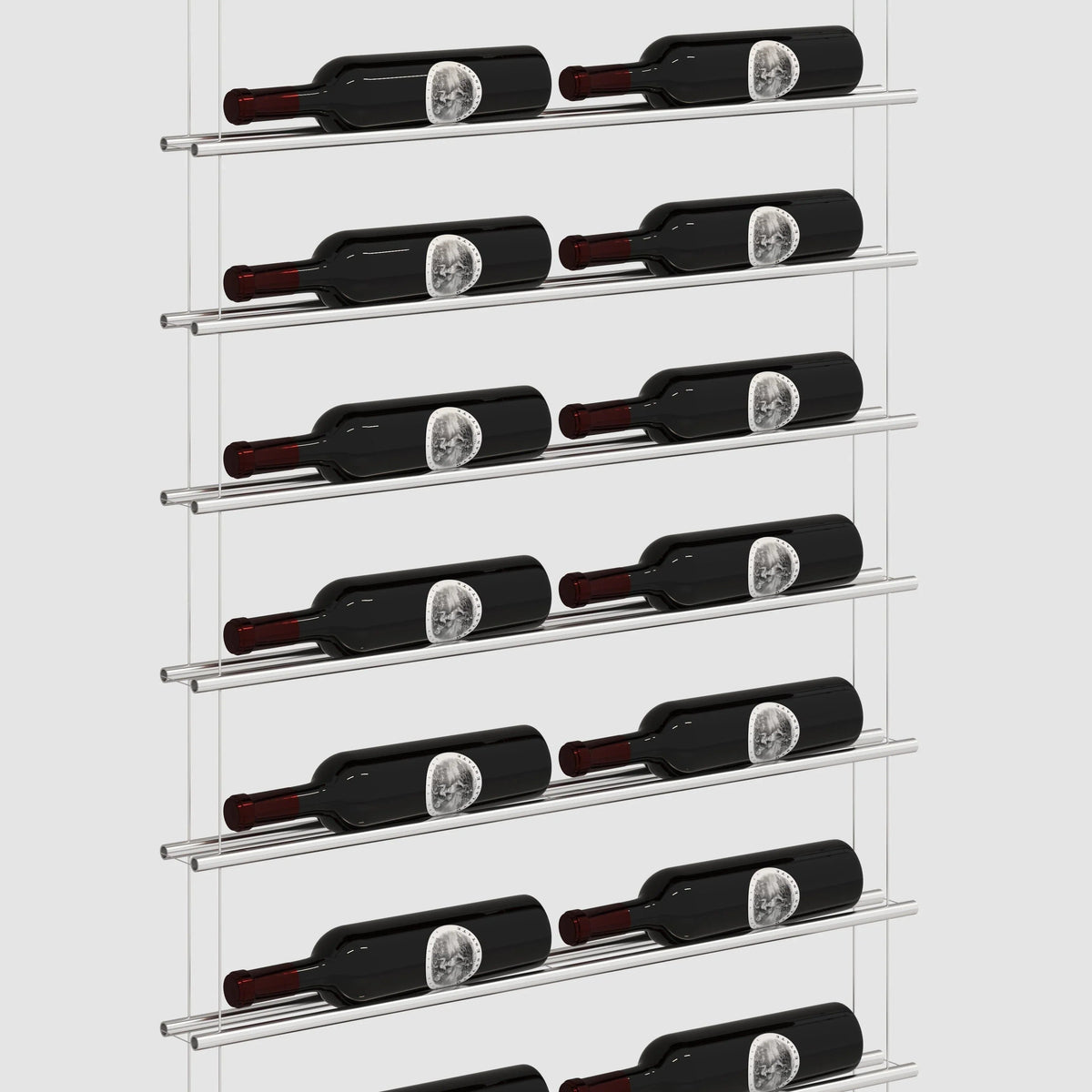
Forward-facing label presentation revolutionizes bottle accessibility and aesthetic impact. The Label Line Silver Double Width configuration exemplifies this evolution, offering unparalleled visibility for treasured vintages while maximizing spatial efficiency. This innovative system positions bottles horizontally with labels prominently displayed, transforming wine storage into curated exhibition.
The modular architecture accommodates expansion as collections mature, with each section supporting significant weight while maintaining the crystalline transparency that defines modern cable systems. Installation flexibility allows vertical or horizontal orientation adjustments based on ceiling height and available wall space.
Geometric Pattern Applications
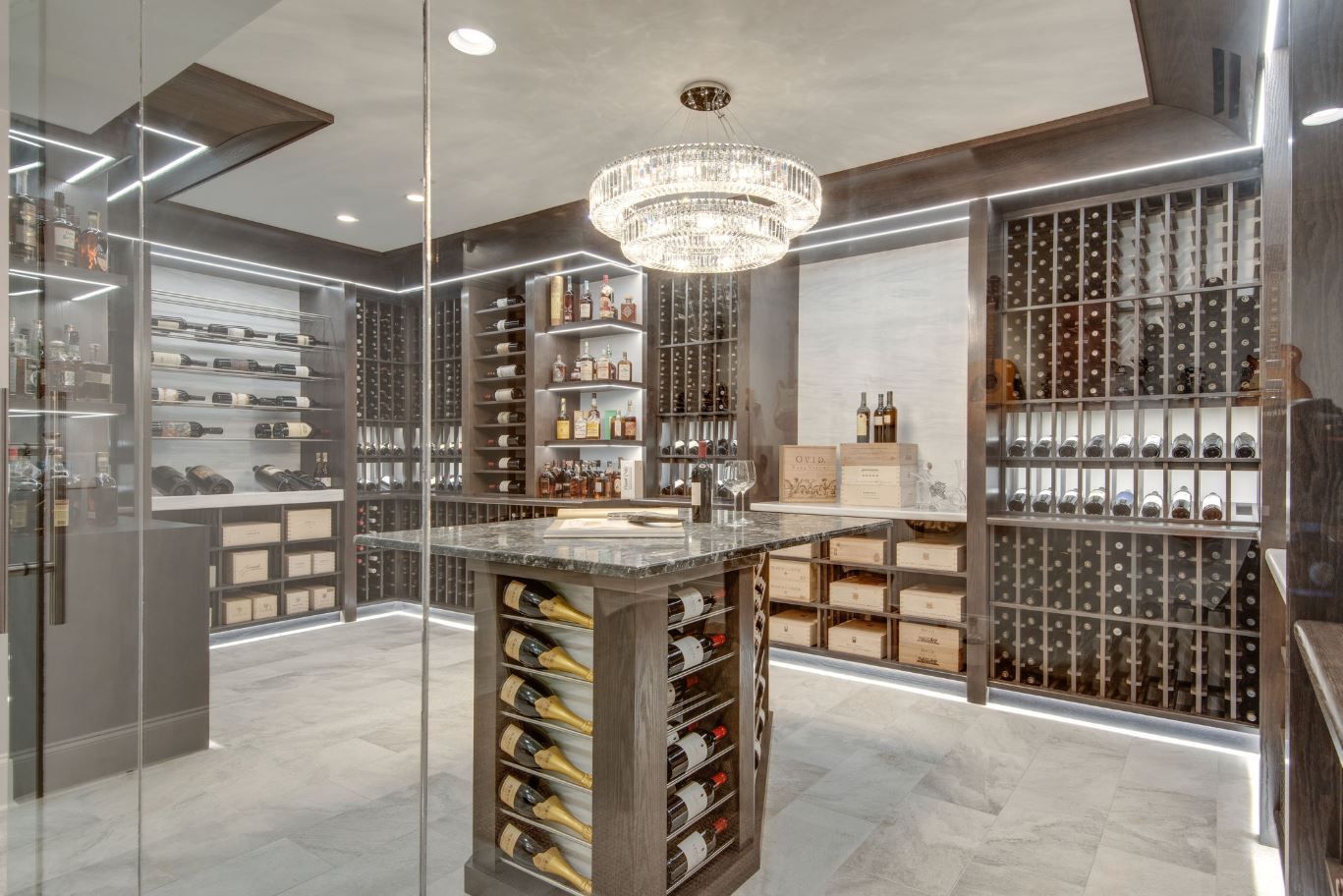
Beyond linear arrangements, contemporary cable systems embrace geometric complexity. Diagonal cable patterns create dynamic visual tension, while staggered bottle heights generate rhythmic cadence across the display plane. These configurations work exceptionally well in temperature-controlled glass enclosures where viewing angles from multiple vantage points enhance the installation's sculptural presence.
Material Specifications and Finish Selections
Finish selection profoundly influences ambient aesthetics. Brushed stainless steel delivers industrial sophistication compatible with loft conversions and urban residences, while polished chrome amplifies light reflection in smaller installations. Bronze and brass patinas introduce warmth suitable for traditional architecture undergoing contemporary renovation.
Cable diameter typically ranges from 1.5 to 3 millimeters, with thicker gauges reserved for floor-to-ceiling installations exceeding twelve feet. End fittings require architectural-grade fasteners capable of penetrating concrete, steel beams, or reinforced joists—amateur installation risks catastrophic failure.
Integration with Climate Control Infrastructure
Cable systems demand synergistic relationship with environmental management apparatus. Because they occupy minimal volumetric space, airflow patterns remain largely unobstructed, facilitating uniform temperature distribution. This characteristic proves invaluable in cellars where precision cooling units maintain narrow temperature bands between 55 and 58 degrees Fahrenheit.
Humidity considerations remain paramount. Stainless steel resists corrosion in high-humidity environments, unlike powder-coated metals that may degrade over decades. Positioning cables away from direct cooling vents prevents frost accumulation that could compromise structural integrity.
Spatial Planning Considerations
| Ceiling Height | Recommended Cable Spacing | Approximate Capacity per Linear Foot |
|---|---|---|
| 8-9 feet | 12-15 inches | 8-10 bottles |
| 10-12 feet | 15-18 inches | 12-15 bottles |
| 13+ feet | 18-24 inches | 15-20 bottles |
Vertical spacing between bottle rows typically measures eight to ten inches, allowing comfortable extraction without disturbing adjacent vintages. Accessibility requirements for wheelchair users or commercial service necessitate lower mounting configurations with wider aisle clearances.
Frequently Contemplated Implementation Questions
Can Cable Systems Accommodate Irregular Bottle Dimensions?
Champagne, magnums, and split bottles require specialized pin configurations. Adjustable mounting brackets permit reconfiguration without complete system overhaul, though initial planning should allocate zones for non-standard formats.
What Maintenance Protocols Ensure Longevity?
Annual tension verification prevents cable elongation that could compromise bottle security. Quarterly inspection of anchor points identifies potential fastener fatigue before critical failure occurs. Cleaning requires only mild detergent and microfiber cloths to preserve finish integrity.
Professional Installation versus Self-Execution
While enthusiastic collectors may contemplate autonomous installation, structural calculations and anchor load distribution exceed typical DIY capabilities. Professional installers possess specialized torque equipment ensuring fasteners achieve manufacturer-specified tension without over-stressing ceiling joists or floor substrates.
Incorrectly tensioned cables create asymmetric load distribution that accelerates material fatigue, potentially leading to catastrophic display collapse and irreplaceable wine loss.
Reputable suppliers provide complimentary design previews incorporating architectural plans, allowing pre-visualization before commitment. This service proves invaluable for renovations where structural modifications require coordination with general contractors and HVAC specialists.
The investment in cable wine display systems transcends mere storage—it manifests as architectural statement piece that elevates both residential and commercial environments while safeguarding valuable collections through engineering excellence.