Wine Cellar Humidity Control: Essential Guide for Collectors
The Science Behind Optimal Wine Cellar Humidity
Maintaining precise humidity levels in wine storage environments represents one of the most critical aspects of proper viticulture preservation. The ideal humidity range for wine storage oscillates between 60% and 70% relative humidity, creating an environment that prevents cork desiccation while simultaneously inhibiting mold proliferation.
When humidity levels plummet below this optimal threshold, cork shrinkage occurs, compromising the hermetic seal that protects your precious vintages. This phenomenon, known as ullage acceleration, allows excessive oxygen infiltration that can irrevocably damage even the most prestigious bottles in your collection.
Conversely, elevated humidity levels exceeding 75% create an environment conducive to mold growth and label deterioration. These conditions not only compromise the aesthetic appeal of your collection but can also introduce unwanted microbial contaminants that affect wine quality.
Understanding Relative Humidity vs. Absolute Humidity
The distinction between relative and absolute humidity proves crucial for serious collectors. Relative humidity measures moisture content as a percentage of the maximum amount air can hold at a given temperature. Absolute humidity, conversely, represents the actual mass of water vapor present in the air regardless of temperature fluctuations.
Temperature variations directly impact relative humidity levels, making sophisticated wine cellar humidity control systems essential for maintaining consistent storage conditions. A mere 10-degree temperature increase can reduce relative humidity by approximately 50%, demonstrating why integrated climate control systems outperform standalone solutions.
Types of Wine Cellar Humidity Control Systems
Contemporary wine cellar humidity control systems encompass diverse technologies, each offering distinct advantages for different storage environments and collection sizes. Understanding these variations enables collectors to select the most appropriate solution for their specific requirements.
Passive Humidity Management Solutions
Passive humidity control relies on natural moisture regulation through carefully selected materials and construction techniques. Natural stone walls, for instance, provide inherent moisture buffering capabilities, absorbing excess humidity during peak periods and releasing moisture when levels decline.
Redwood and cedar construction materials offer similar hygroscopic properties, naturally moderating humidity fluctuations through their cellular structure. However, passive systems alone rarely provide the precision required for serious wine collections, particularly in challenging climatic conditions.
Active Humidity Control Technologies
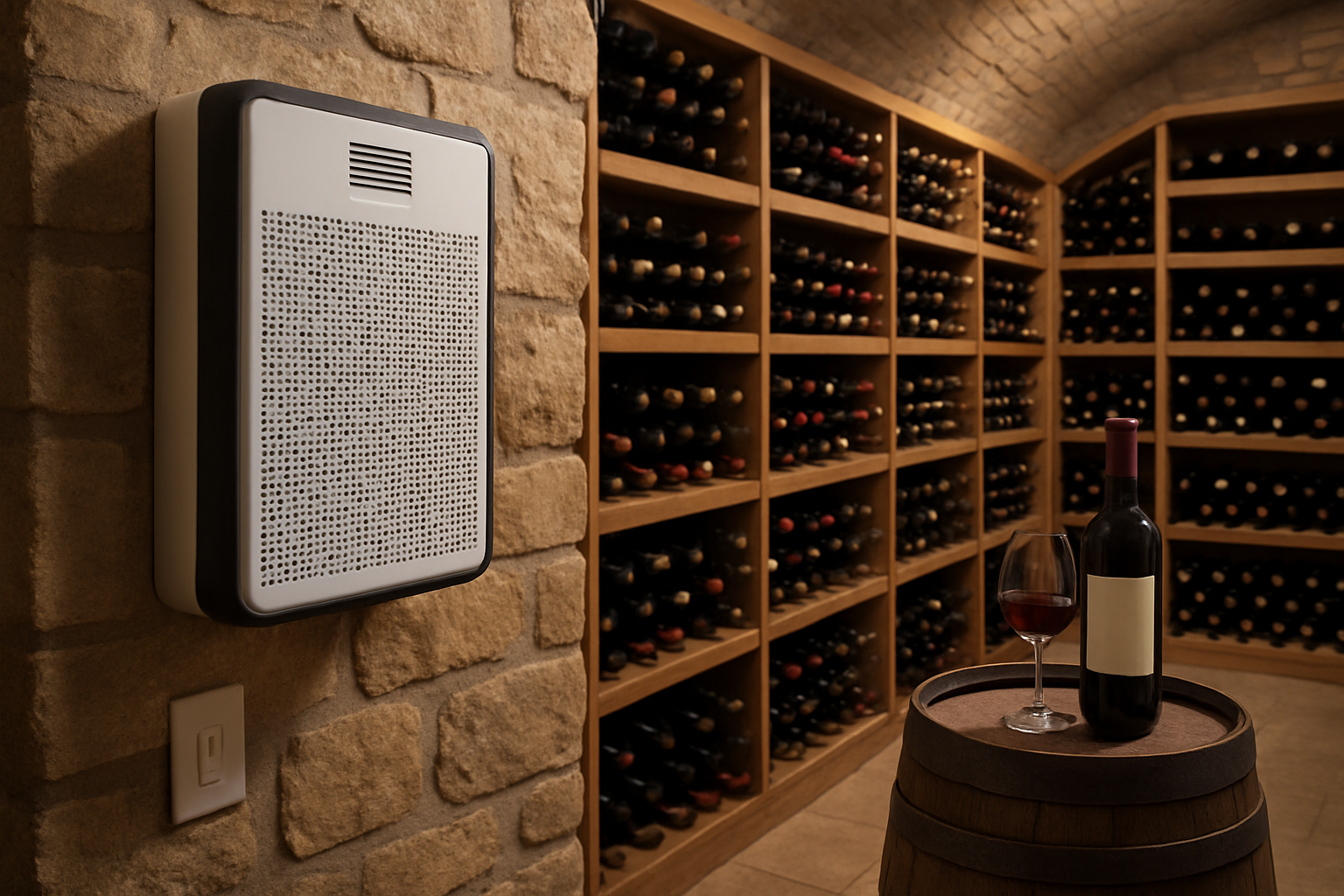
Active wine cellar humidity control systems employ mechanical components to precisely regulate moisture levels regardless of external conditions. These systems typically integrate with cooling units to provide comprehensive climate management.
Ultrasonic humidifiers generate fine water vapor through high-frequency vibrations, offering rapid humidity adjustment with minimal energy consumption. These units excel in smaller cellars where precise control takes precedence over coverage area.
Steam generators provide robust humidity production for larger installations, utilizing heated water vapor to achieve consistent moisture distribution throughout extensive storage areas. Their reliability makes them particularly suitable for commercial wine storage facilities and expansive private collections.
"The marriage of temperature and humidity control in wine storage cannot be understated. While temperature preserves the wine's chemical integrity, proper humidity maintains the physical barrier that protects your investment for decades."
Integrated Climate Control Systems
Sophisticated integrated systems combine cooling, heating, and humidity control within unified platforms. These comprehensive solutions monitor multiple environmental parameters simultaneously, adjusting each component to maintain optimal storage conditions.
Advanced models incorporate predictive algorithms that anticipate environmental changes, proactively adjusting humidity levels before fluctuations occur. This preemptive approach ensures consistent storage conditions while minimizing energy consumption.
Installation Considerations for Humidity Control Systems
Proper installation of wine cellar humidity control systems requires careful attention to numerous factors that influence system performance and longevity. The cellar's vapor barrier integrity directly impacts humidity control effectiveness, making professional assessment essential before system selection.
Cellar Insulation and Vapor Barrier Requirements
Effective humidity control begins with proper cellar construction. A continuous vapor barrier prevents moisture migration between the cellar and surrounding areas, reducing the workload on active humidity control systems.
Insulation quality affects both temperature stability and humidity control efficiency. Insufficient insulation forces humidity control systems to work continuously, increasing energy consumption and reducing component lifespan.
Air sealing eliminates unwanted infiltration that can dramatically impact humidity levels. Professional installation includes comprehensive sealing of all penetrations, ensuring optimal system performance.
Drainage and Water Management
Humidity control systems generate condensate that requires proper drainage to prevent water damage and maintain hygienic conditions. Gravity drainage systems offer reliability but may require specific floor elevations during construction.
Condensate pumps enable flexible installation options where gravity drainage proves impractical. High-quality pumps include backup systems to prevent overflow during primary pump failures.
Monitoring and Maintenance of Humidity Control Systems
Continuous monitoring ensures optimal performance while preventing costly damage to valuable wine collections. Modern systems incorporate sophisticated sensors that track multiple environmental parameters with laboratory-grade precision.
| Monitoring Parameter | Optimal Range | Monitoring Frequency |
|---|---|---|
| Relative Humidity | 60-70% | Continuous |
| Temperature | 55-58°F | Continuous |
| System Performance | Manufacturer Specs | Weekly |
Remote Monitoring Capabilities
Contemporary wine cellar humidity control systems offer sophisticated remote monitoring through smartphone applications and web-based interfaces. These platforms provide real-time alerts when conditions deviate from preset parameters, enabling immediate corrective action regardless of location.
Data logging capabilities create comprehensive environmental records that prove invaluable for insurance documentation and collection management. Historical trend analysis helps identify potential issues before they impact wine quality.
Preventive Maintenance Protocols
Regular maintenance ensures consistent system performance while preventing unexpected failures that could jeopardize valuable collections. Quarterly filter replacements maintain optimal air quality while preventing system strain.
Annual professional inspections identify potential issues before they escalate into costly repairs. Experienced technicians calibrate sensors, verify system operation, and recommend upgrades when necessary.
Cost Considerations and ROI Analysis
Investment in professional wine cellar humidity control systems provides substantial returns through collection preservation and enhanced storage reliability. Quality systems protect collections worth hundreds of thousands of dollars while maintaining optimal conditions for long-term aging.
Initial Investment vs. Long-term Protection
Premium humidity control systems require significant upfront investment but provide decades of reliable service when properly maintained. The cost of replacing damaged bottles due to inadequate humidity control often exceeds the expense of proper environmental systems.
- Entry-level systems suitable for collections under 1,000 bottles typically range from $3,000 to $8,000
- Mid-range solutions for serious collectors accommodate 1,000 to 5,000 bottles with investments between $8,000 and $20,000
- Commercial-grade systems designed for extensive collections or hospitality applications require $20,000 to $50,000+ investments
Energy Efficiency and Operating Costs
Modern wine cellar humidity control systems incorporate energy-efficient technologies that minimize operating expenses while maintaining precise environmental control. Variable-speed components adjust output based on actual demand, reducing energy consumption during favorable conditions.
Smart scheduling capabilities optimize system operation based on occupancy patterns and external weather conditions. These features can reduce energy consumption by 20-30% compared to traditional fixed-speed systems.
Frequently Asked Questions About Wine Cellar Humidity Control
Collectors often encounter specific challenges when implementing humidity control solutions. These common questions address practical concerns that arise during system selection and operation.
How quickly can humidity control systems respond to environmental changes? Professional-grade systems typically adjust humidity levels within 15-30 minutes of detecting deviations. Response time depends on cellar size, system capacity, and the magnitude of required correction.
Can humidity control systems operate effectively in extreme climates? Quality wine cellar humidity control systems function reliably in diverse climatic conditions when properly sized and installed. Desert environments may require enhanced humidification capacity, while tropical locations might need additional dehumidification capabilities.
What backup systems protect collections during power outages? Sophisticated installations incorporate battery backup systems that maintain critical monitoring functions during brief power interruptions. Longer outages may require generator backup to prevent environmental deviation.
Professional wine cellar humidity control systems represent essential investments for serious collectors seeking to preserve and enhance their valuable collections. Proper system selection, installation, and maintenance ensure optimal storage conditions that protect investments while creating ideal aging environments for prized vintages.